
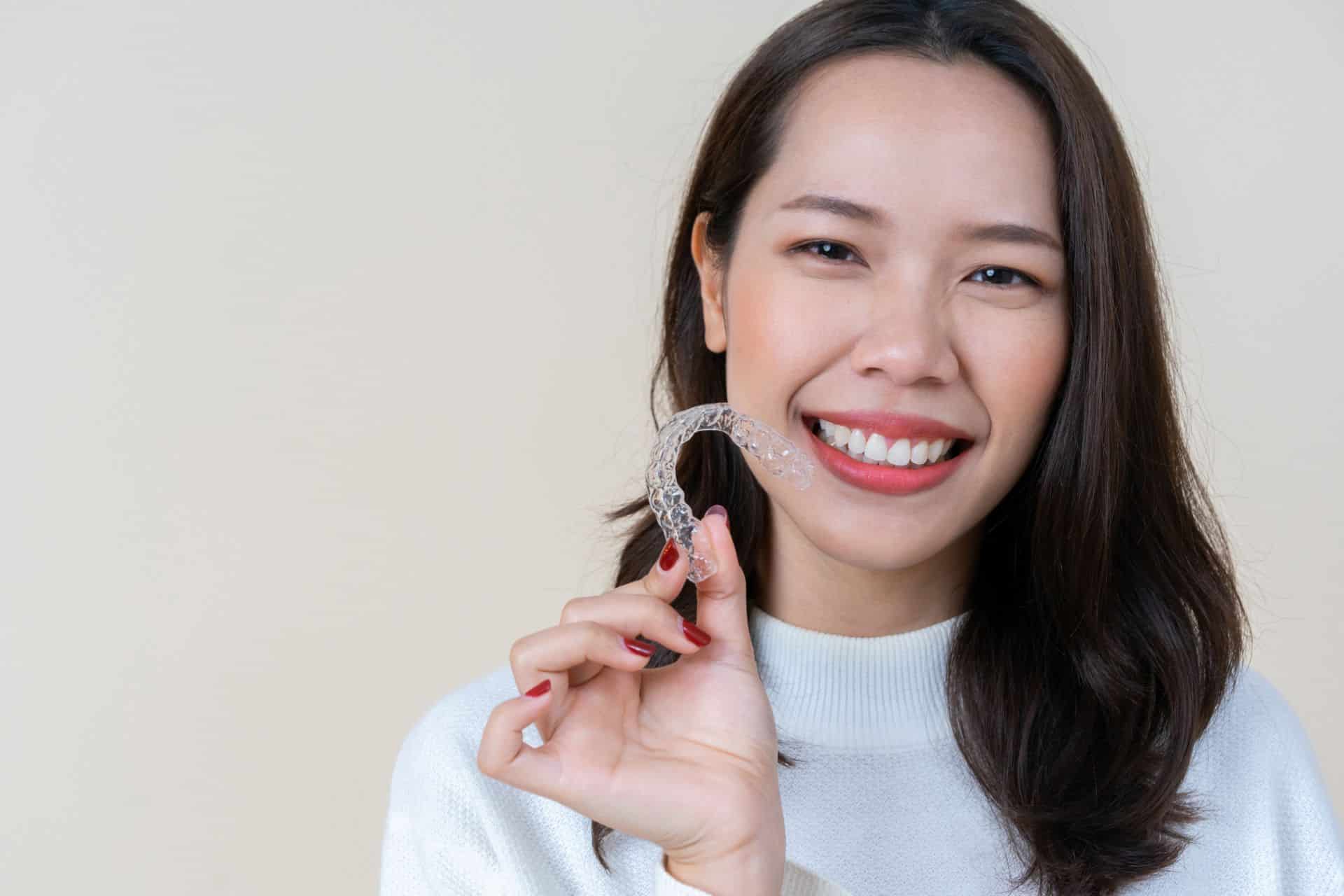
For many adults, the question is not just whether Invisalign can straighten teeth. It is whether clear aligners can work with crowns, fillings, older restorations, or previous dental treatment. Crowns do not automatically rule out Invisalign, but they do require a closer look before treatment begins.
At Orthodontic Specialist, adults can discuss Invisalign, clear aligners, and other orthodontic options with Dr. Michael Donato and Dr. Nicolle Donato. The goal is to understand your smile, your bite, and your dental history before recommending a treatment path.
How Crowns Affect Invisalign Treatment?
A dental crown covers and protects a tooth that has been weakened, restored, reshaped, or repaired. The American Dental Association explains that crowns may be used to protect a weak tooth, restore a broken tooth, improve tooth shape, or cover a dental implant in its ADA guide to dental crowns.
Invisalign moves teeth by applying controlled pressure through a series of custom aligners. That pressure acts on the tooth root and supporting bone, not only the visible part of the tooth. Because of that, a crowned tooth may still move if the root, gums, and surrounding support are healthy.
The main difference is precision. Crowns can have different shapes, surfaces, and contours than natural enamel. The orthodontist needs to check whether a crowned tooth can be moved, whether the crown appears stable, and how the aligner will fit around it.
Why Does an Orthodontic Exam Matters Before Clear Aligners?
Before Invisalign begins, the orthodontist reviews your teeth, bite, gums, and dental history. This is especially important if you have crowns, bridges, implants, large fillings, or dental work that has been in place for many years.
The exam helps determine whether any dental concerns should be addressed before treatment starts. If a crown is loose, cracked, uncomfortable, or poorly fitted, your general dentist may need to repair or replace it before clear aligners are made.
Your bite also matters. Adults with crowns may have dental work that was shaped to match an older bite pattern. If orthodontic treatment changes how the teeth meet, the final bite needs to be planned carefully so the restored teeth remain comfortable and functional.
For adults in Staten Island, NY and surrounding communities, this appointment can help avoid guesswork. It gives you a clearer answer about whether Invisalign is appropriate for your smile and what should be reviewed first.
Can Invisalign Attachments Be Placed on Crowns?
Invisalign attachments are small tooth-colored shapes that help aligners grip certain teeth and guide specific movements. They are often placed on natural enamel, but bonding them to crowns can be less predictable.
The crown material matters. Porcelain, ceramic, zirconia, and metal-based crowns may respond differently to bonding. In some cases, an attachment may not adhere to a crown as reliably as it would to natural tooth structure.
That does not always prevent Invisalign treatment. The orthodontist may be able to place an attachment on a neighboring tooth, adjust the movement plan, or design the aligners in a way that works around the crown. Minor movement may be simpler, while rotation, bite correction, or detailed tooth positioning may require a more customized approach.
What Adults With Older Dental Work Should Consider?
Many adults consider Invisalign after years of dental treatment. A patient may have one crown from a root canal, several fillings, veneers, a bridge, or a dental implant. Each type of dental work can affect orthodontic care differently.
A crown on a natural tooth may be able to move because the tooth root is still present. A dental implant does not move like a natural tooth because it is anchored in bone. A bridge can also limit movement because it connects multiple teeth together.
Older crowns and restorations can also affect timing. If a crown is near the end of its lifespan, your orthodontist may recommend coordinating with your dentist. Sometimes Invisalign should happen before a final crown is replaced so the new restoration can be made to match the corrected tooth position. In other cases, dental repair may need to happen first.
What Does This Means for Invisalign Candidates With Crowns?
Dental crowns do not automatically prevent adults from getting Invisalign. The more important question is whether your crowns, tooth roots, gums, and bite can support the movements needed for your case.
If your crowns are stable and your teeth are healthy, Invisalign may still be possible. If a crown is loose, the bite is complex, or a restored tooth needs difficult movement, your orthodontist may recommend a different timeline or another approach.
This is why an in-person consultation matters. General information can help you understand the possibilities, but your plan depends on your teeth, crowns, and bite. For adults comparing Invisalign options in Staten Island, NY, a personalized orthodontic review can help separate what is possible from what is best for long term dental health.
Ready to Schedule an Invisalign Consultation in Staten Island, NY?
Potential new patients in Staten Island, NY and surrounding communities can schedule a consultation today with Orthodontic Specialist to discuss Invisalign with crowns or other dental work. During the visit, Dr. Michael Donato or Dr. Nicolle Donato can review your smile, check your bite, and explain whether clear aligners may be appropriate.
If you have crowns, fillings, bridges, implants, or older dental work, bring that information to your consultation. This visit can help you learn whether Invisalign is a good next step and whether any dental concerns should be addressed first.